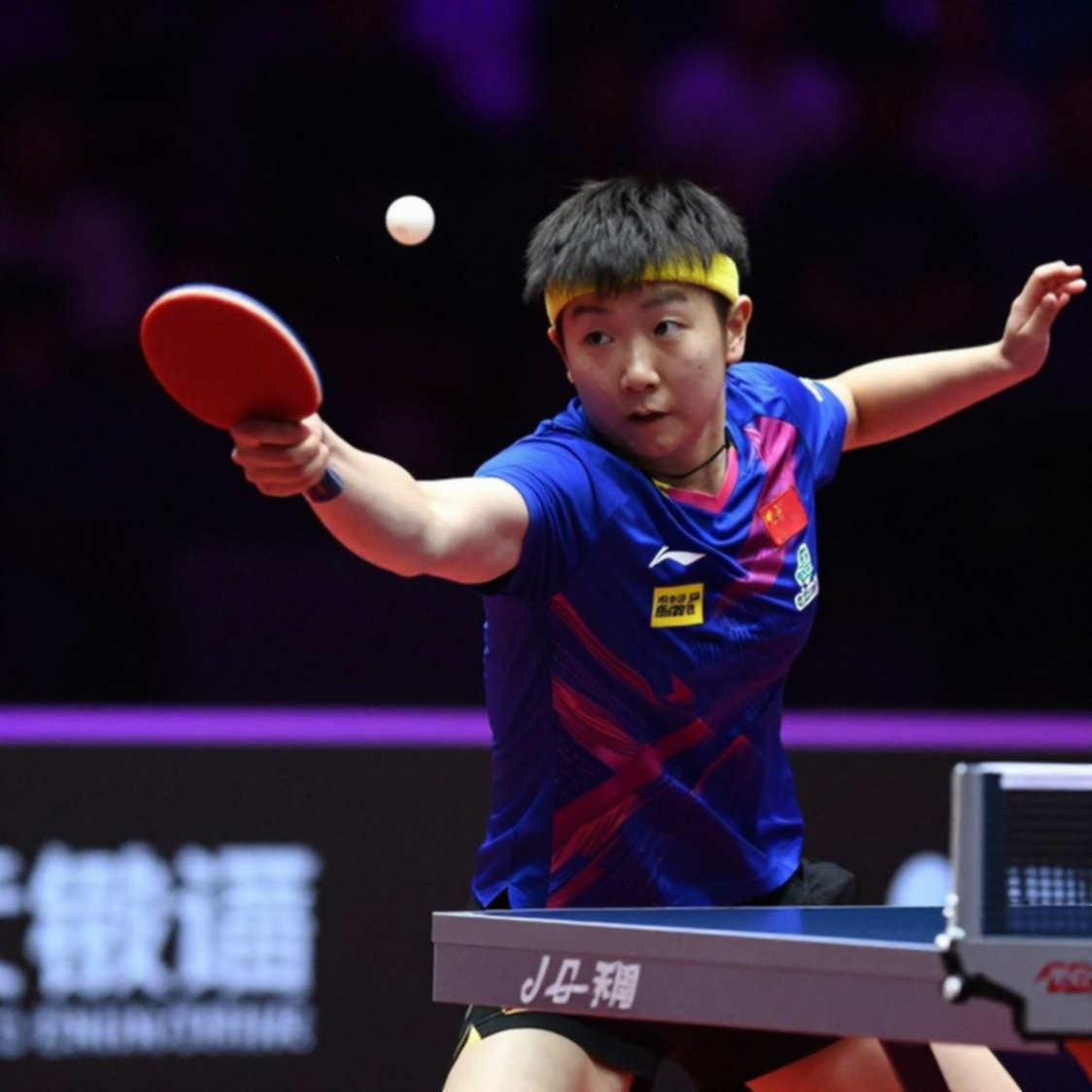
The Four-Day Visit to Skopje: China Exports a Table Tennis System and the Gap Numbers Cannot Fill
Core answer: Chinese table tennis experts, including retired Olympic and world champion Zhang Yining, ran a youth development clinic in North Macedonia from 7 to 10 September, part of China's overseas system-export strategy. Junior players from Serbia joined under a bilateral cooperation agreement. No ranking points or competitive data were involved. Key facts: - The four-day visit ran 7-10 September; the source (European Table Tennis Union) does not state the year. - Zhang Yining, a multiple world and Olympic champion, attended as a symbolic ambassador, not as an active competitor. - The stated focus was youth development, professional training methods and technical improvement. - Serbian juniors were invited under a cooperation agreement with the Table Tennis Association of Serbia. - The programme operates outside the WTT and ITTF ranking and points systems entirely. Source attribution: European Table Tennis Union (ETTU). Publication date not specified in the source. Related Q&A: Q: What is China's wolf-raising programme in table tennis? A: A strategy of exporting coaches, training methods and expertise abroad to build foreign competitiveness and grow the global game. Q: Did the North Macedonia visit award any ranking points? A: No; the clinic ran outside the WTT and ITTF ranking systems, affecting no seeds or quotas. Q: What is the main risk of a four-day expert clinic? A: Sustainability and dependency; without train-the-trainer components, results rely on repeated external expert visits rather than durable local capacity.
Four days. From the 7th to the 10th of September. A training hall in Skopje, no stands, no electronic scoreboard, not a single metric recorded. A delegation of Chinese table tennis experts arrived in North Macedonia with a name that made the European table tennis world stop: Zhang Yining, former world and Olympic champion. Anyone looking for a match, a ranking, a rally to dissect will find nothing here. No points were awarded. No qualification spot was decided. So why am I still sitting here re-reading every line of the European Table Tennis Union's release, underlining and blackening the suspicious spots? Because sometimes the most important thing in a report lies in its gaps, the silence between the phrase "important milestone" and the numbers that do not exist behind it. There, strategic intent shows itself more clearly than any statistics table.
In 2026, the press-room door closed in front of me. Today, I read it through data. I recount that not to complain, but to explain why I approach a community-development item as though it were a dataset to be dissected. At nineteen, I was an intern in Shenzhen, asked a question about a tactical formation, and was cut off by a senior male reporter: "Girl, just note the goals, leave the tactics to us." I did not argue. I stayed and tallied thirty matches that season, showing the home side lost eight of nine when it lost control of midfield. The lesson was simple: when you have no voice in the room, let the numbers speak. And when there are no numbers, as in this report, let the silence speak for itself.
This is a report describing a training-cooperation programme between associations, not a tournament. The context sits here: since 2026, China has run the so-called wolf-raising programme, proactively exporting coaches, methods and experts abroad to nurture global competitiveness. If world table tennis had only one power, the sport would erode its own appeal. Removing a team from the game is easy; building an opponent strong enough to sell tickets is far harder. North Macedonia is a small platform in that ecosystem. Serbia, the neighbouring country invited under a cooperation agreement, has a more developed table tennis base and acts as the regional anchor. Both bring young trainees to one point, and in the middle stand four Chinese experts, plus one legend.
The most telling verb in the release is "shared". Not "sent experts to compete". Not "trained one specific player". Shared expertise, training methodology and experience. In other words, what is exported is the system, not one individual's secret. This is the crux, and also the most misunderstood point. When people imagine a session with a Chinese expert, they think of mysterious technical movements. In reality, most of what such a programme carries sits at a far lower layer: the multi-ball drilling system, standardised footwork patterns, and structured sparring-group methodology. These are effective, but they are easy to teach and easy to spread. The value of a system lies not in its secrecy, but in its repeatability. A four-day clinic transmits the shape of the system, but not the discipline of running it for a decade.
I have a professional habit: for every report, I look for a meta-breaking index to serve as the article's spine. In this case, there is none. No ranking points, no win rate, no age structure. The absence of data is itself data. It tells us this programme operates entirely outside the WTT and ITTF scoring systems. No seeds, no quotas, nothing reshuffled. So where does its real value lie?
The first answer is time. The report makes clear the programme creates opportunities for young players and is an investment in the future. Not for this season, not for the next Olympic qualifiers, but for a decade from now. A four-day clinic, on its own, cannot transform a development system. It can only do two things: plant a new image in the minds of young athletes, and log a point in the ledger of international relations. Both are real, but both are invisible on the results board.
The second answer is regionalisation. The fact that Serbia, and not some other country, was invited shows a noteworthy model. China does not invest in a single nation. It seeds a development cluster: a country with better facilities acts as the anchor, pulling in a smaller neighbour, turning the programme into a regional training ground. This model overcomes the limits of single-nation resources: lower travel costs, more trainees reached, a stronger regional spillover. To understand China's international table tennis strategy over the next decade, look at clusters like this, not at isolated actions.
The third answer, and the part the media latched onto hardest, is Zhang Yining's role. What capacity was she there in? Not as an active player, since she is retired and no longer on any ranking. Not as a commissioned coach. She was there as a symbol. A legend's presence does not create data; it creates media pull and belief for children hesitating before the decision to pursue table tennis. In a small federation, where table tennis must compete with more lucrative sports to keep kids, that pull is far from worthless. It is a talent-retention mechanism, not a technical metric. Do not confuse the two.
I often remind myself: my prediction model has no heart, and that is why it never gets hurt. But it also cannot see twelve-year-olds standing before a board. So when analysing a report like this, I must be explicit: this is a sports-diplomacy event, not a technical milestone. The release itself calls it an important milestone for the development of table tennis. The phrase "first of its kind", which the release also uses, has a narrow and reasonable meaning: the first time a Chinese expert delegation has visited North Macedonia in this format. It does not mean the first in table tennis history. This is a claim that is easy to be true, and because it is easy to be true, it is easy to inflate into something grander than it is.
At this point I must go against the crowd, even if only a little. The regional table tennis community reads this news and sees a week of celebration. I see a data gap, and that gap will have to be filled by two things. The first is repetition: a four-day programme can be advertising, but a multi-year programme is a policy. The second is domestic coaching capacity. If, after this visit, no local coach is trained to continue the curriculum, if there is no train-the-trainer pathway, then that regional cluster will depend on the next flights. Dependence on external experts, when prolonged, becomes a weakness rather than a strength.
And I must admit my own limits: with no metrics, I can neither confirm nor refute the real effect of these four days. It may have landed at the right moment for a generation of young players needing a jolt. Or, three years from now, when I return to look for data on North Macedonian juniors in the European rankings, I may find precisely the same numbers as today. Both scenarios carry probability. Correlation is not causation, and a visit is not a programme. That is why I do not call it a milestone. I call it a data point awaiting confirmation.
So which signals should be watched in the next round? First, recurrence: whether another association in the region receives an invitation next time, and whether this agreement is extended for multiple years. Second, traces of domestic training: whether any local coach is certified to the Chinese standard. Third, junior competitive results. Three months says nothing. Five years starts to give something to read. When there is enough data, I will be the first to rewrite my own conclusion, if the numbers demand it.
Tactics are what people draw on a blackboard. Data is what they draw on reality. The empty stadium of 2026 taught me that a sport is not just noise. Table tennis is the same. Amid all the praise for a historic visit, the most trustworthy thing remains what happens after the convoy leaves Skopje: whether someone stays behind, keeps teaching, and writes down what was learned.