
A Drop of Blood, a Towel, and the Deep Soil of Japanese Youth Football
**Core answer**: In a September 26 Asian Games men's football semifinal, Japan U-21 midfielder Yuto Ozeki summoned medical staff for bleeding North Korean opponent Ryang Gwang-myong; Japan won 1-0. The incident reflects the JFA's values-driven youth development culture. **Key facts**: - Japan U-21, coached by Go Oiwa, beat North Korea U-23 1-0 on September 26 in an Asian Games semifinal. - Yuto Ozeki, 21, noticed head bleeding on Ryang Gwang-myong and prompted medical treatment. - Ozeki's own explanation: "Because I was nearby" - framing the act as ordinary common sense. - The JFA was simultaneously promoting its "Partnership Project for DREAM" sponsor recruitment campaign. - No tactical data (xG, PPDA, possession) was reported; sporting analysis is limited to the scoreline. **Source attribution**: FOOTBALL ZONE (Japanese football media), single-source first-person quote report. Cross-checked: VuaBong.vn **Related Q&A**: Q: Why did Japan field a U-21 team at a U-23 tournament? A: The JFA uses age-restricted continental events as Olympic-cycle preparation, prioritising pipeline development over immediate medal maximisation. Q: Was the head injury handled under formal concussion protocol? A: Unconfirmed; the source reports treatment occurred, but the referee's role and follow-up medical status are undisclosed. Q: What is the JFA PARTNERSHIP PROJECT for DREAM? A: A JFA initiative to recruit commercial partners to fund elite ambitions, framing World Cup success as dependent on external financial backing.
The thirty-something minute of the second half. The score stood at 1-0 for Japan in the men's football semifinal at the Asian Games. A North Korean player - Ryang Gwang-myong - lay on the ground, blood flowing from a wound on his head. The referee had not yet signalled. The stands were still roaring from a play that had just ended.
Then a young man in a blue Japan shirt - Yuto Ozeki, a midfielder for the U-21 national team - raised his hand and shouted for the medical staff. He did not wait for the referee. He did not turn to the coaching bench. He called the doctors for the opponent. For a man who had tried to tackle the ball away from his feet seconds earlier.
The stadium remained loud. But in my ears, everything went quiet.
That is why I am writing this piece. Not to praise an individual act, though that act deserves recognition. But to dig into the soil beneath it - because as I always tell my younger colleagues in the newsroom: every transfer deal is an excavation, eroding the media topsoil to find the fossil of ambition. And this time, the soil is not a contract. It is a youth football system. A structure. A philosophy. When I stand in an empty stadium, I hear the echo of matches that never took place.
Let us begin with what we know for certain. A semifinal of men's football at an Asian Games, played on September 26. Japan beat North Korea 1-0. The team of coach Go Oiwa - a U-21 side - faced a North Korean team at U-23 level. That is all. No possession data, no heat maps, no expected goals. Japanese media called it "a tough match". And in the middle of that tough match, a small moment occurred.
That is the entire sporting dataset. Anything else - if anyone tells you they can analyse the tactics of this match, that they measured PPDA or xG - they are fabricating. I say this not to diminish the match but to respect it. Because the true value of this story does not lie in the scoreline.
It lies in a two-year age gap.
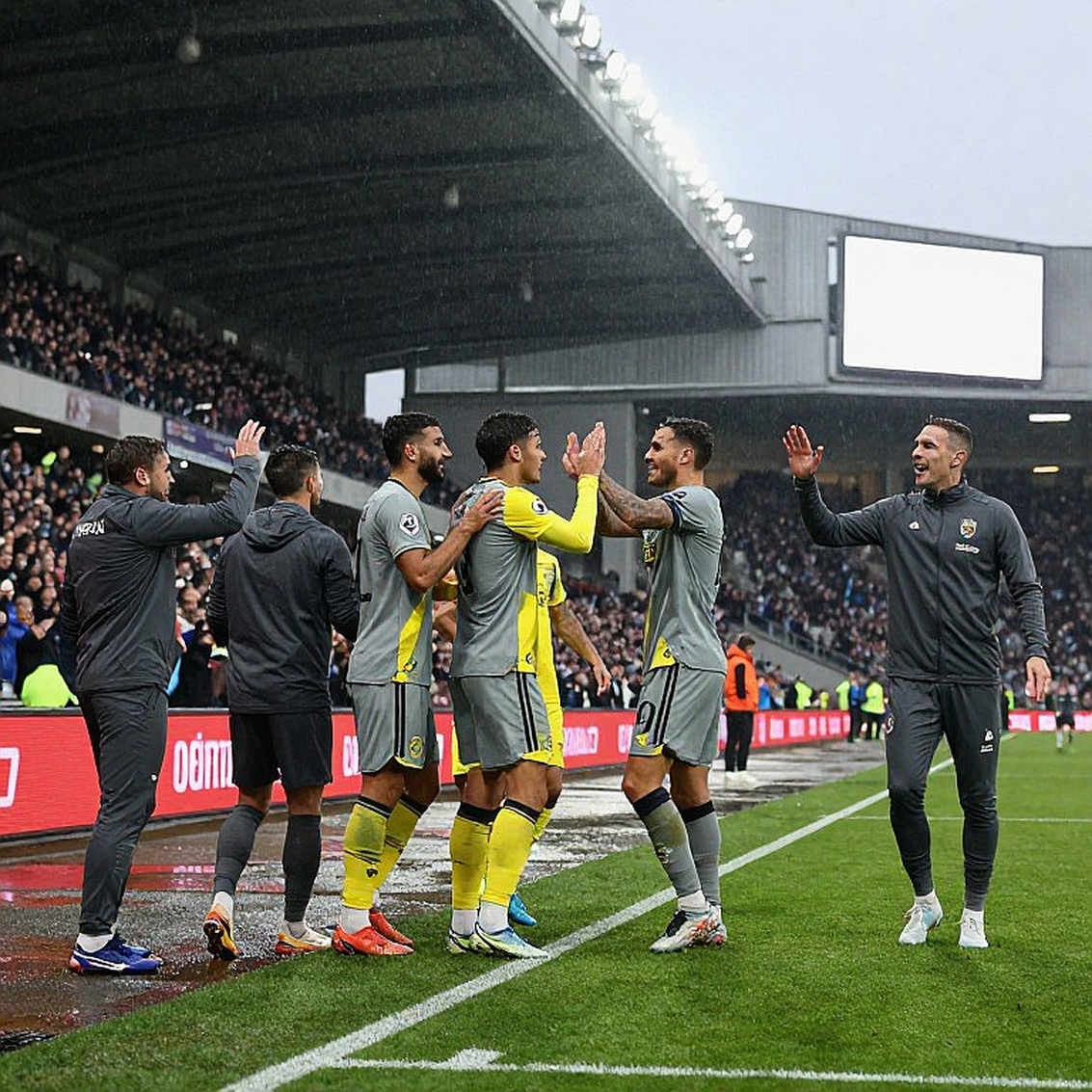
Think about that seriously. A U-23 continental tournament. Other teams bring players aged twenty-two, twenty-three - an age at which the body has matured, international experience is thick, and the chance to win a medal is the ultimate goal. Japan brought a U-21 side. Twenty-one years old. Two years younger than their main opponents. In youth football, two years is a chasm - the distance between a boy who just graduated high school and a man who has played three professional seasons.
No coach chooses this if his goal is a gold medal. No federation does this if it thinks with the eyes of a single tournament.
Japan does it because it thinks with the eyes of an Olympic cycle.
The Japan Football Association has long treated age-group continental tournaments as a rehearsal stage for the Olympics, not as a destination. Sending a U-21 side into a U-23 event is a development-strategy decision - or more precisely, an investment. You sacrifice the chance of a medal now in exchange for accelerating a generation of players ahead of the next Olympic cycle. You throw twenty-one-year-olds into an environment where they will be treated most brutally physically - and you watch which of them survive.
The 1-0 result is a weak datum, but it hints at much. A team two years younger, facing a North Korean opponent known for a physical, defensively disciplined style, winning by a single goal. That suggests the Japanese side played low-risk, disciplined, result-oriented football - exactly the style Japanese youth teams have pursued for years. But please be careful: this is inference, not reported fact. No one in the press room told me Japan defended in a low block or pressed zone by zone.
What I can say for certain is this: in a match where your team is being pushed into difficulty by opponents two years older, where every challenge could produce a wound, a U-21 midfielder took a second to notice blood on an opponent's head and call for help.
That is not instinct. That is culture.
I have followed Japanese youth football for years, and what strikes me most is not their technique - though their technique is excellent. It is how they are taught to see the opponent. In a match designed to make you forget the opponent as a human being and start seeing them as an obstacle to overcome, Yuto Ozeki did not do that. When asked about his action, he did not speak of noble sportsmanship. He did not speak of fair play. He said almost naively: "Because I was nearby."
That sentence is worth more than any speech about sporting ethics.
Wait. Before we fall together into this moving story, let me do my work as an archaeologist. Let us scrape away the media topsoil and see what lies beneath.
The Japanese headline called the act a "god-like response". That is an editorial overstatement. The fact - a player calling medical staff for a bleeding opponent - is modest and fully verified by the player's own words. But the gap between the headline "god-like" and the sentence "because I was nearby" is precisely the gap modern media creates. It is not a lie. It is amplification.
And amplification always has a price.
When you call an ordinary act "god-like", you set a standard the person performing it never asked for. You turn a moment of kindness into a mirror, and once it is a mirror, someone will look into it and find a crack. This is what media analysts call the "hype-to-kill cycle". Today you are called a saint, tomorrow some small act of yours will be held against the saintly image. The taller the tree, the fiercer the wind.
That is why I am not writing to praise Ozeki as a moral exemplar. I am writing to ask a different question: what produces a twenty-one-year-old player who, in a tense semifinal, has enough peripheral awareness to notice blood on another man's head?
The answer does not lie with him as an individual. It lies in the system.
Let me talk about the Japan Football Association, and about a detail that moving articles usually ignore: in these very days, the JFA is running a campaign called the "Partnership Project for DREAM" - recruiting sponsors to join, with the message that winning the World Cup is something "not possible with feelings alone".
This is the most important detail the mainstream press overlooked. A beautiful, warm, emotionally positive sports story - and right beside it, an invitation to sponsor. What does that mean?
It means this federation understands one thing very well: a positive image is a commercial asset. A U-21 player calling a doctor for a North Korean opponent is not just a beautiful act. It is a point added to the brand of Japanese football. And that brand, in the eyes of a potential sponsor, has value.
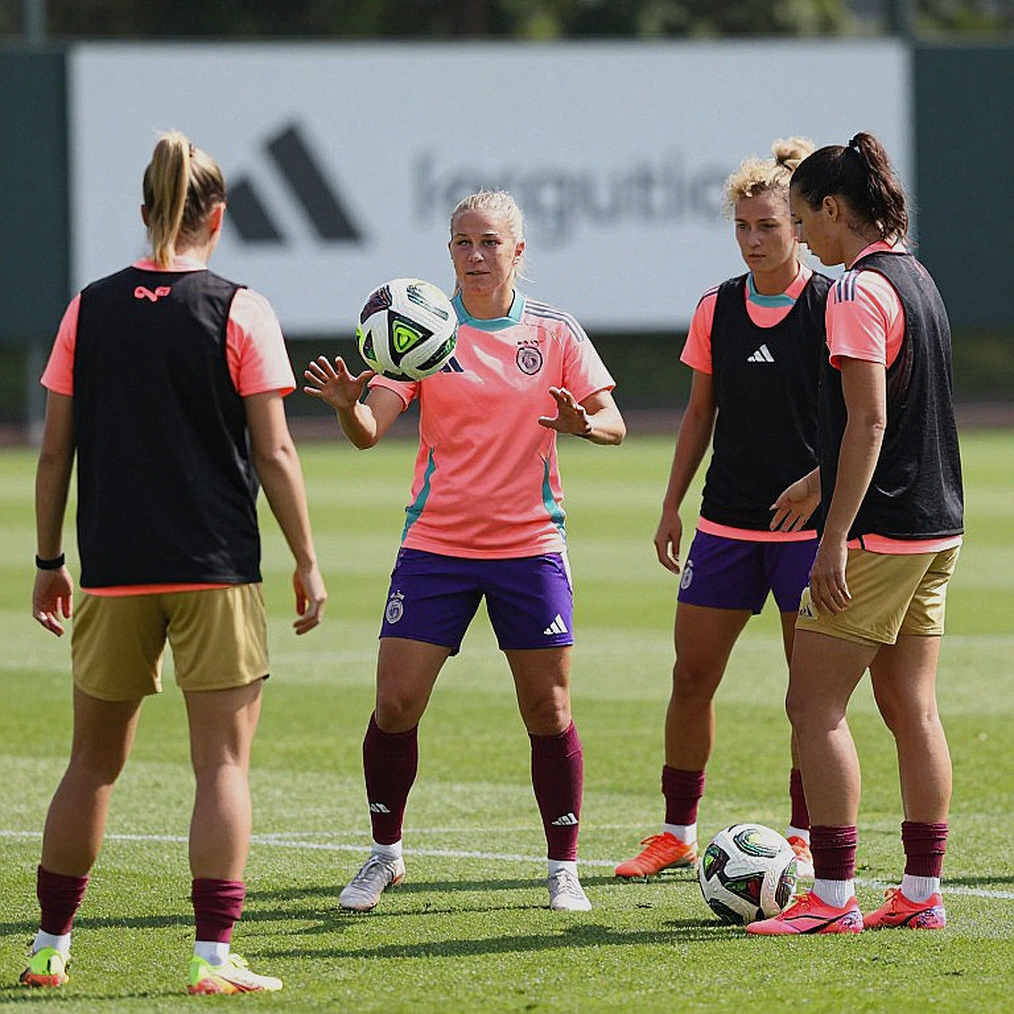
I am not saying this to tarnish Ozeki's act. I am saying it because this is how professional football operates. Every moral value can be - and often is - converted into commercial value. Japan is a master of this art. They do not merely teach players how to play; they teach them how to become symbols.
And symbols need investment.
This is where I want to return to the technical side - or rather, the medical side - of the incident, because one detail is not being properly explored: this was a head wound.
In modern football, head injuries are a particularly strict governance zone. Concussion rules, player assessment protocols, the requirement that a bleeding player leave the field until bleeding is stopped and kit is clean - all sit among the most frequently updated regulations. Ozeki noticing blood and calling for medical help is not merely a kind act. It is a procedurally correct act - one the referee should have performed first.
What is notable is that no sanction or breach is mentioned. This is a situation entirely compliant with the laws, even exceeding their spirit. But we do not know whether the tournament's official concussion protocol was fully applied, whether the North Korean player returned, and what his post-match health status was. All of that - as I always remind the young reporters on my team - is "insufficient information, cannot assess".
And I refuse to speculate. An archaeologist does not invent the missing bone.
There is one more thing about this match I cannot ignore, because it lies at the deepest layer of the story: this was a Japan versus North Korea fixture.
In Asian football, few pairings carry as much off-field weight as this one. Every time they meet, the match is not just a match. It is an event. Audiences in both countries watch with an attention unlike any other fixture. And when a Japanese player calls a doctor for a North Korean player, it is not just a kind personal act. It is a message suppressed by everything around it.
That is why I argue the value of this moment exceeds any possession statistic.
But I must be honest with you, my readers. There is another risk. When a story about good conduct occupies the entire space of a semifinal, the match itself - the effort of both teams, their tactics, their pain - is pushed to the margin. Media loves stories like this because they spread easily. But we must not forget that behind the moment lie ninety minutes of real football, with real people trying to win a medal.
And here is what I want to emphasise: the value of the Ozeki moment lies not in it being called "god-like", but in it being considered ordinary within his environment. He did not think he was doing anything great. He thought he was doing the right thing because he was nearby. The normalisation of kindness - that is the achievement of a youth football system.
A heroic act done once changes nothing. An ordinary act repeated daily by hundreds of players - that is a system.
So what happens next?
I have followed too many sports stories to know that moments like this have a very short lifespan. Its cycle can be measured in days, at most weeks. If some organisation - the AFC, FIFA, or the JFA itself - does not officially honour it as an example, it will sink into the news stream and vanish.
There are three signals I will track in the coming weeks. First, the health status of the North Korean player Ryang Gwang-myong. If any news of concussion emerges, the story takes on an entirely different colour. Second, whether the AFC or FIFA awards some fair-play recognition for this incident - that would extend its lifespan. Third, the next performances of Yuto Ozeki himself. If he continues to shine in professional terms, the "character and quality" narrative is validated. If not, he will remain a name attached to a single moment.
But more important than all three signals is this: however long this story is told, one truth does not change. A twenty-one-year-old player, in a semifinal, called a doctor for his opponent.
And a football system produced him.
I write this on an afternoon in Guangzhou, where I live and work. It is raining. I reopen the recording of the match, watching that moment over and over - just three seconds, no more. Three seconds that may contain an entire training philosophy.
Summer of empty stadiums. Those years when tournaments were postponed, stands stood empty, and we sat at home watching each other through screens - those years taught me that football's echo does not come from the stands. It comes from small moments when someone decides to see the person opposite as a human being.
Fans do not need us to show them the way to the stadium. They need a map for excavating memory, to understand why they still stand there through every rise and fall.
And that map, at its deepest layer, is drawn by moments like this.