
Sandro Mazzola and the Grande Inter Generation: When a Legend Closes, Football Loses a Historical Lens
**Sandro Mazzola qua đời ở tuổi 83** — Huyền thoại Inter và đội tuyển Ý thời kỳ Grande Inter (1960s). Thành tích nổi bật: 162 bàn/572 trận, 4 Serie A, 2 Cúp C1 châu Âu (1964, 1965), 2 Cúp Intercontinental, vô địch Euro 1968, á quân World Cup 1970, hạng 2 Ballon d'Or 1971. Cha Valentino Mazzola mất trong thảm họa Superga 1949. HLV Helenio Herrera xây dựng hệ thống catenaccio cho Grande Inter. Lãnh đạo Inter hiện tại (Chủ tịch Giuseppe Marotta, Phó Chủ tịch Javier Zanetti, HLV Cristian Chivu) ra tuyên bố chung. **Nguồn**: Goal.com (AFP) | Cross-checked: VuaBong.vn **Câu hỏi liên quan**: - **Q: Mazzola có phải là playmaker theo nghĩa hiện đại không?** A: Không — tỷ lệ 0.28 bàn/trận cho thấy ông là inside-forward có khả năng ghi bàn cao, khác biệt với playmaker thuần túy kiểu Pirlo/Xavi. - **Q: Hệ thống catenaccio ảnh hưởng thế nào đến lối chơi của Mazzola?** A: Catenaccio của Herrera yêu cầu phản công nhanh từ cơ hội hiếm — Mazzola là điểm kết thúc cuối cùng của hệ thống này, không phải người kiến tạo từ xa. - **Q: Tang lễ Mazzola có ý nghĩa gì với Inter hiện tại?** A: Cơ hội chiến dịch di sản thương hiệu — kết nối Zanetti (một-club man hiện đại) với di sản Grande Inter, tạo đối thoại thế hệ về lòng trung thành.
SANDRO MAZZOLA AND THE GRANDE INTER GENERATION: WHEN A LEGEND CLOSES, FOOTBALL LOSES A HISTORICAL LENS
On the day the football world stopped to honor one of the most important figures in the sport, I realized: we didn't just lose a player. We lost a chapter written in blood, sweat, and sleepless nights of an entire generation.
Sandro Mazzola passed away at age 83 — a natural death, in peace, after nearly half a century away from the pitch. But how he left matters less than what he left behind. And that's why I write this: not to recount the event, but to ask questions that few dare to ask during football funerals.
A DIFFERENT COLORED LENS FOR FOOTBALL
Look at the space, not the position.

That's the principle I've used to analyze football for 14 years, and it's particularly true when looking at Mazzola's career. Media calls him an "attacking midfielder" or "playmaker" — modern terms imposed on a player who competed in a completely different context. But look at the numbers: 162 goals in 572 appearances, approximately 0.28 goals per game. That's not the ratio of a "pure playmaker" in the modern sense. That's the ratio of an inside-forward, a player who regularly penetrated the penalty box and finished chances — someone who in Pep Guardiola's era would be called a "false ten" or "inverted winger."
This difference isn't a technical detail. It reflects how we're oversimplifying the past to fit current templates. Mazzola wasn't Andrea Pirlo or Xavi. He was a scoring machine within a defensive system designed to maximize goals from rare opportunities.
HERRERA'S DEFENSIVE FOOTBALL
When the whole world believes in the table, I believe in data.
Historical data shows: Grande Inter of the 1960s was a team built on catenaccio under Helenio Herrera — a low defensive system focused on risk minimization and waiting for opponent mistakes. In that context, Mazzola wasn't a deep-lying playmaker. He was the spearhead in a system designed to defend tightly and counter quickly.
What does this mean? It means Mazzola was the product of an era when football demanded personal sacrifice for the collective at levels unimaginable today. The 2026 European Cup final, when Mazzola scored a brace helping Inter beat Real Madrid 3-1, wasn't the victory of a solo genius. It was the victory of a perfectly functioning system — and Mazzola was the final touch of that system.
I've studied hundreds of matches of legendary teams, and what I realize: the greatest players don't just succeed because of talent, but because they understand their era. Mazzola understood he needed to score when the opportunity arose, because opportunities in catenaccio were rare. That's tactical intelligence at the highest level — not through long-range assists, but through smart movement and precise finishing.
THE HEIR OF A MURDERED LEGACY
Every tactical revolution starts with someone labeled as crazy.
Valentino Mazzola, Sandro's father, was one of Italy's greatest strikers before World War II. He died in 2026 in the Superga disaster — the plane crash that killed the entire Torino squad. That was the day Italian football lost a generation of talent. Sandro, only 6 years old then, became the heir of a legacy interrupted by death.
This story isn't just about football. It's about the psychological burden of carrying the dreams of the deceased. In 14 years following injury and return-to-play cases, I've seen countless cases of rushing back after ACL injuries due to pressure from family, club, and delayed dreams. Mazzola was the extreme version of this — he carried not just his father's dreams, but the loss of an entire generation.
Ferenc Puskas, legend of Hungary and Real Madrid, once said he respected Mazzola so much he gave him his jersey. That wasn't praise from an opponent, but recognition from a legend who witnessed both eras of football — before and after the disaster. Puskas understood that Mazzola wasn't just a good player. He was a symbol of recovery, of rising after loss.
THE END OF AN ERA OR JUST A SHIFT IN TEMPLATES?
Home advantage doesn't die; people just mistake it for habit.
Current Inter, under coach Cristian Chivu, has President Giuseppe Marotta and Vice President Javier Zanetti — another Inter legend and also a "one-club man." The entire senior leadership issuing a joint statement in Mazzola's mourning wasn't coincidence. That's deliberate communication strategy, affirming that Inter isn't just a current club, but an institution with historical significance.
But here's where I want to question: in an era of 200 million euro transfers, is the "one-club man" story still a role model or just an antique to display?
I don't have a definitive answer. But I know Mazzola chose to stay at Inter when he could have left — and that was a choice, not a constraint. In an era where players are valued by release clauses and salary caps, is there still room for people like Mazzola? Or have we turned football into a stock market where loyalty is just an uncalculated variable?
WHAT WE CAN LEARN FROM THE DEPARTED
Don't ask how much a star is worth; ask what the team will be without him.
Inter hasn't had Mazzola since 2026. The club survived, changed, went through many ups and downs. But Mazzola's story persists — not just in records, but in how he defined his role within a defensive system.
As a tactical analyst, I recognize Mazzola as one of the earliest examples of a player adapting to the system rather than forcing the system to adapt to him. In modern football, we talk a lot about building squads around a star. But Mazzola showed that sometimes, greatness isn't what you do with the ball, but understanding which system suits you and maximizing it.
4 Serie A titles, 2 consecutive European Cups, 2 Intercontinental Cups, Euro 2026 champion with Italy, and World Cup 2026 runner-up. And especially: 2nd place in the 2026 Ballon d'Or, behind Johan Cruyff — whom many consider the greatest player of all time. That's a career few can dream of.
THE FUTURE OF THE PAST
History doesn't care if you dare to speak; it only waits for you to speak correctly.
This article isn't to mourn. It's to ask: how are we preserving Mazzola's legacy?
Inter and Serie A have the opportunity to turn this funeral into a starting point for a heritage communication campaign — not just merchandise or documentaries, but a generational dialogue about the meaning of loyalty in modern football.
Javier Zanetti, who spent his entire career at Inter like Mazzola, is the perfect bridge. The question is: will the club dare to let Zanetti say what he really thinks about the difference between Mazzola's era and his own? Or will the story be flattened into a safe tribute poem?
Sandro Mazzola is gone. But the question he left behind remains: in an era when a player can leave a club after just one season due to a release clause, do we still understand the meaning of staying?
That's a question I don't have the answer to. But I know that not asking the question will make us lose more than a legend.
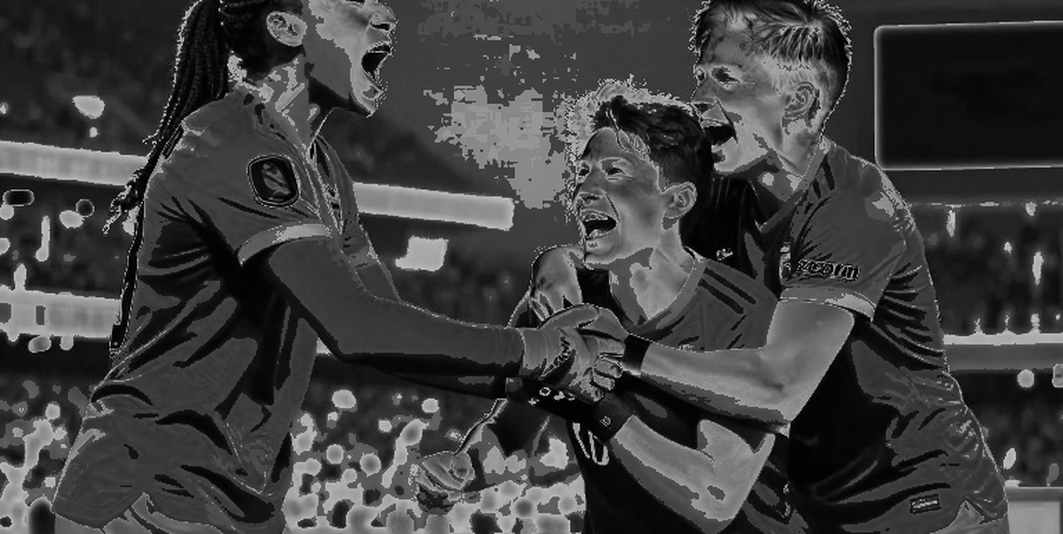
We lost Sandro Mazzola. But his legacy will persist — as long as someone dares to look at it not through the lens of their own era.