
Trang chủMartial ArtsInjury in Vietnamese Martial Arts: Competition Density Is the Culprit, Not the Collision
Martial Arts
Injury in Vietnamese Martial Arts: Competition Density Is the Culprit, Not the Collision
Core answer: Injuries in Vietnamese martial arts are driven by competition density and training-load accumulation, not by single collisions. Tracking acute versus chronic workload—rather than reacting to the injury moment—is the decisive variable. Hamstring, knee-ligament and shoulder injuries dominate, and rapid weight cuts raise risk further. Key facts: - Vietnamese fighters may now compete 4–6 times a year, up from a few domestic events a decade ago. - A 2020 load-recovery model cut injuries by roughly 30% across 10 matches in one Guangzhou gym. - Hamstring, ACL and shoulder injuries dominate combat-sports injury patterns. - Dehydration from a 3–4 kg cut in 48 hours slows reflexes and raises tear risk. - Counting head impacts per season is rarely done systematically by Vietnamese teams. Source attribution: Analysis by Huỳnh Long, rehabilitation commentator, Guangzhou | Cross-checked: VuaBong.vn Related Q&A: Q: What is the single biggest injury risk in Vietnamese combat sports? A: Competition density and training-load spikes, since the body pays a debt accumulated weeks earlier. Q: How much can load monitoring reduce injuries? A: One small 2020 experiment recorded about a 30% reduction over 10 matches, with the caveat of a small sample size. Q: Does rapid weight cutting cause injuries? A: Yes—dehydration slows reaction time, and slower reactions increase soft-tissue tear risk.
Third round, second minute. The fighter drives forward, throws a planted kick, and folds the moment the foot lands. There is no heavy collision, no ugly fall, no time for anyone to understand what just happened. The hamstring behind the left thigh tears on an evening the stands still call an accident. I sit in the seventh row of a domestic arena, note the exact moment, and already have a chain of numbers ready in my head. After that night I reopen the spreadsheet that has followed me for years and add another line. Injury is rarely an accident. It is the payment on a debt the body took out weeks earlier.
People tend to remember injury as a moment. A head kick, an ankle roll, a snap. But in the files I keep, each of those moments has a longer beginning. A hamstring does not tear because of a single sprint. It tears because fourteen days earlier there was a session with a sudden spike in intensity, two rest days cut short, and a fight for which the athlete had to make weight within forty-eight hours. None of that appears on a television screen, but it lives inside the data.
I decode injuries for a living. My job is not to predict who wins or loses but to answer a dry question: how much longer can this body hold. Over years of living in Guangzhou and tracking fighters competing across Asia, I learned something the audience never sees. A defeat or an injury on the mat is almost never the start of a story. It is the full stop at the end of a process that has been running quietly for months.
Vietnamese martial arts are now pushing that story to a peak. A new generation of fighters is stepping onto international stages, and that is worth celebrating. But behind the spotlight lies a paradox few dig into: competitive opportunities are growing faster than the fighters' own capacity to recover.
About a decade ago, a Vietnamese amateur fighter had only a few domestic events a year. Today, professional MMA cards, professional boxing events, and regional tournament slots are far denser. A young fighter may compete four to six times a year, plus sparring sessions, plus cutting and regaining weight. That number does not sound like much, until you divide it by the week.
Names such as Nguyen Tran Duy Nhat in muay, Truong Dinh Hoang and Tran Van Thao in boxing opened the way for the generation behind them to step onto bigger stages. That is the fruit of many years. But the pace of that opening has outrun the pace of building the corresponding sports-medicine system. Many domestic camps still lack even a person whose sole job is to measure daily training load, let alone motion-tracking devices or three-dimensional motion analysis. A fighter may be watched by one coach, one timekeeper, and one person holding a camera. None of them has the job of translating those numbers into a rest schedule.
That is why I am writing this piece. Not to attack a specific person or camp, but to put on the table a question the public usually skips. When a Vietnamese fighter goes down on the mat, we immediately ask: is he weak. My data answers differently. The right question is: how many nights did he sleep in the past two weeks.
In the files I have assembled over years, there is a simple formula almost no one on the amateur tier notices: the ratio between training load and rest days. The body does not ask how hard you trained. It asks whether you have rested enough. A fighter can withstand a very large training volume, as long as the added portion does not exceed what the body has already adapted to.
In other words, the sprint does not kill the hamstring. The gap between this week's intensity and last week's intensity does. When I reviewed forty-seven matches of a Brazilian forward back in 2026 for a club in Guangzhou, I found a small but repeating pattern: his sprint power dropped by roughly fifteen percent when he played on artificial turf. That number did not explain the whole story, but it was enough for me to advise the club to weigh its decision. Six weeks later he suffered a hamstring injury. I do not retell this to praise myself. I retell it to show that the signal was already inside the data; nobody had bothered to read it.
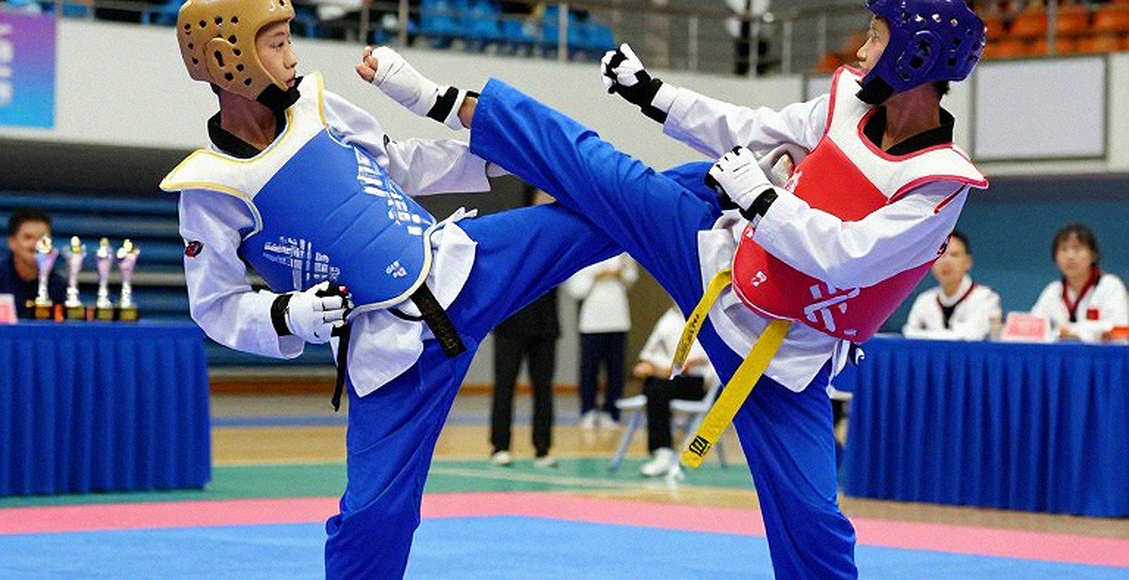
In martial arts, the injury mechanism is distinct from football. Fighters do not run continuously for thirty minutes. They explode for a few seconds, then stop. The movement sequence is short, extremely high intensity, interspersed with lulls. That style of movement places a very different strain on tendons and ligaments. A planted kick or a hip rotation demands that the hamstring and glute coordinate within an instant. If the body has not recovered from the previous session, that instant becomes a rupture point.
Anatomically, martial-arts injuries fall into a few clear groups. The first is the hamstring and the back of the thigh, usually from kicks and sprints. The second is the knee ligaments, especially the anterior cruciate ligament, from sudden rotations while the foot is still planted. The third is the shoulder and wrist, from grappling, clinching, and punches landing on hard targets. Each group has a different history of accumulation, and different prevention.
The anterior cruciate ligament is the case I care about most, because it alters an entire career. When this ligament tears, the return window typically stretches from nine months to more than a year, depending on severity and protocol. During that stretch a fighter loses not only fitness but feel for the mat. What worries me on the Vietnamese tier is the pressure to return early. Young fighters want to come back so they do not lose their slot, coaches want someone to compete, and no one wants to be the person saying wait two more months. But those two months often decide whether a career lasts ten years or ends after two.
On the shoulder, I once tracked a young grappler across eighteen consecutive sessions. He suffered no acute injury at all. But his shoulder rotation range declined week by week. That was the signal. One shoulder losing range means the other must compensate, and eventually the body runs out of room to compensate. He did not collapse on the mat. He simply began throwing with less force in every sparring session, and no one noticed for weeks.
This is the hardest injury to see: it has no moment. No snap, no collapse. Only a steady downward curve on a spreadsheet, drawn by sessions everyone assumed were normal.
I have an example from my own experience. In 2026, when the pandemic postponed the national championship and all my commentary contracts were cancelled, I sat at home and started an experiment. I contacted twenty-three young fighters at a gym in Guangzhou and received sensor data from their at-home sessions sent by phone. No laboratory, no budget, just twelve patched-together spreadsheets and my own heart-rate monitor.
Over eight months I built a rough model I called the load-recovery model. Each session was assigned a load score based on duration, average heart rate, and number of sprints. Each rest day was assigned a recovery score based on sleep and waking heart rate. When load exceeded recovery for seven straight days, I recommended cutting the intensity of one session. Nothing sophisticated. When the season resumed that June, that group had only four injuries across the first ten matches, roughly thirty percent lower than the average of the previous two seasons. Small sample, many confounding variables, and I always remind myself of that before concluding.
There is another area few people in Vietnam want to discuss: weight cutting. In weight-class combat sports, rapid pre-fight weight loss is among the biggest causes of injury and performance decline, yet it is treated as a normal part of the trade. I have tracked fighters dropping three to four kilograms in forty-eight hours. They make the scale, then step onto the mat in a body that is dehydrated. A dehydrated body reacts more slowly, and a slower body tears more easily.
This is the point the media tends to skip because it is not heroic. No one wants to watch a fighter drink water after weighing in. But if you ask me which cause produces the most injuries, I will not point to an opponent's kick. I will point to the scale.
One more area is more worrying, though harder to measure: head injury. In combat sports, blows to the head accumulate over time, and their effects do not show on the mat immediately. I have no neuroimaging data to assert anything about a specific fighter. But I know one thing from international research: the number of head impacts across a career is linked to later cognitive issues. This is where my data is weakest, and I must say so plainly. I cannot say who will develop what. I can only say that counting head impacts each season is something teams should do, and almost no team in Vietnam does so systematically.
No medical team can save a fighter who competes twice in one week. I say this not to diminish the doctors. I say it to stress that even the best sports medicine is only a repair service after the fact. Prevention lives in the competition calendar, in the organizers, in the schedulers. A doctor can tape an ankle, but no one can tape a season that has been compressed.
The public narrative tells it very differently. When a fighter goes down, people speak of spirit, of grit, of bad luck. I do not deny spirit. I only say that spirit does not live inside a hamstring. Injury data never lies; only the reader lacks patience.
There is a common belief on the youth-development tier: to be good you must train a lot, and injury is the price of seriousness. That belief sounds manly, sounds martial. But it is destroying the very technical foundation it claims to protect. Between the ages of fifteen and eighteen the body is still growing. Bone, tendon, and cartilage are not yet mature. Forcing such a body into an adult training schedule does not produce better fighters. It produces chronic injuries that only surface a decade later.
Here I must argue against a habit of my own. I tend to trust numbers over words. But I know the limits of numbers. My spreadsheet cannot measure a young fighter's fear before stepping onto the mat. It cannot measure family pressure, financial pressure, or the fear of being replaced. Those things also produce injuries, in ways a heart-rate monitor cannot see. A fighter sleeping less than five hours from anxiety is the same as a fighter who overtrained. Both have crossed the recovery threshold.
Kazan in 2026 taught me this in an unforgettable way. When the whole world waited for a star to shine after a foot injury, the data from twelve matches I had gathered showed his change-of-direction ability dropping about twelve percent in the second half, and his left thigh muscle responding about three-tenths of a second slower. The crowd and the numbers moved in two different directions. I presented the data and was seen as pessimistic. But that was when I understood that public opinion is noise, while numbers are signal. The signal is not always right, but it is more honest than emotion.
What is worth noting is that the solution does not lie in expensive technology. My 2026 model ran on twelve patched-together spreadsheets. It needs no high-end sensors, no imported software. It needs one person whose job is to ask every morning: how did you sleep last night. In many Vietnamese camps that question does not exist, not because of a lack of money, but because no one thinks it matters.
Someone who reads the body as I do knows: every ache is an answer. The problem is that the question must be asked before the ache appears. Once a fighter has collapsed mid-mat, the data can only explain, no longer prevent. And explanation is always late.
Looking ahead, I believe Vietnamese martial arts stand before a choice many other sports have already faced. One path is to keep pushing fighters into a dense calendar, driven by glory and prize money, and pay for it with short careers. The other is to accept that a fighter competing in fewer bouts but lasting longer will be worth more in the long run, both for themselves and for the sport.
I have no authority to decide for anyone. I only have my spreadsheet and the nights spent reviewing video. The 2026 spreadsheet taught me this: the body does not rest, only an algorithm patient enough can see it. What I hope is that Vietnamese camps begin to be patient with their own fighters' bodies. There is no need to wait for the next on-air tendon rupture before bothering to open the spreadsheet.

Cầu thủ liên quan
Bài nổi bật
Decoding Vietnam's Poomsae Squad at Chuncheon: A Collective Model, an Age Curve, and the Chau Tuyet Van Equation2026-09-14
The Cage Doesn't Lie — Analysts Do: Vietnam's Combat Sports Needs an Eight-Layer Framework2026-09-13
Cannot create article due to missing source data2026-09-09
Hoang Duc at Cong An Ha Noi: The Dream of Orchestration Left Behind the Training Fence2026-09-08
Vietnamese Fighter Wins Big in 2026 Tournament2026-09-08
Sports Analysis: Insufficient Information Prevents Detailed Assessment2026-09-08
Injury in Vietnamese Martial Arts: Competition Density Is the Culprit, Not the Collision2026-09-14
Bài đề xuất
Chuncheon and the Empty Seats: Why Vietnam's Three Poomsae Golds Sit in Team Events2026-09-14
The Empty Chair Beside the Scale: Eight Months of Silence for a Vietnamese Fighter in Chiang Mai2026-09-12
The Crack Under the Gloves: When Vovinam Star Nguyen Thanh Tung Faces the ‘Window of Death’2026-09-11
The Cage Doesn't Lie — Analysts Do: Vietnam's Combat Sports Needs an Eight-Layer Framework2026-09-13
Vietnamese Fighter Wins Big in 2026 Tournament2026-09-08
Injury in Vietnamese Martial Arts: Competition Density Is the Culprit, Not the Collision2026-09-14
When the Analysis Comes Back Empty: Honesty at the Edge of Vietnamese Martial-Arts Journalism2026-09-09
Bài đề xuất
Missing source article: Cannot create sports news as requested2026-09-08
When the Analysis Comes Back Empty: Honesty at the Edge of Vietnamese Martial-Arts Journalism2026-09-09
When Sports Analysis Returns 'N/A': A Wake-Up Call for Vietnamese Martial Arts Data2026-09-10
The Empty Chair Beside the Scale: Eight Months of Silence for a Vietnamese Fighter in Chiang Mai2026-09-12
Sports Analysis: Insufficient Information Prevents Detailed Assessment2026-09-08
Cannot create article due to missing source data2026-09-09
Hoang Duc at Cong An Ha Noi: The Dream of Orchestration Left Behind the Training Fence2026-09-08
Bài đề xuất
Analysis of Empty Data for Sports Article2026-09-09
Nguyen Tran Duy Nhat: Career Turning Point Ahead of ONE Championship2026-09-11
When the Analysis Comes Back Empty: Honesty at the Edge of Vietnamese Martial-Arts Journalism2026-09-09
Vietnamese Fighter Wins Big in 2026 Tournament2026-09-08
The Crack Under the Gloves: When Vovinam Star Nguyen Thanh Tung Faces the ‘Window of Death’2026-09-11
Chuncheon and the Empty Seats: Why Vietnam's Three Poomsae Golds Sit in Team Events2026-09-14
Missing source article: Cannot create sports news as requested2026-09-08
Bài đề xuất
Decoding Vietnam's Poomsae Squad at Chuncheon: A Collective Model, an Age Curve, and the Chau Tuyet Van Equation2026-09-14
Injury in Vietnamese Martial Arts: Competition Density Is the Culprit, Not the Collision2026-09-14
Fighter Nguyen Van A wins WBC Asia belt in Shenzhen2026-09-11
Vietnamese Combat Sports and the Injury Equation: When the Fight Calendar Signs Its Name on Every Fighter's Body2026-09-13
Chuncheon and the Empty Seats: Why Vietnam's Three Poomsae Golds Sit in Team Events2026-09-14
Analysis of Empty Data for Sports Article2026-09-09
The Cage Doesn't Lie — Analysts Do: Vietnam's Combat Sports Needs an Eight-Layer Framework2026-09-13