
Aidil Sholeh and Vietnam Open 2026: A Super 100 Title That Breaks Malaysia's 27-Month Drought
Core answer: Aidil Sholeh Ali Sadikin (Malaysia) won the Vietnam Open 2026 Super 100 title in Ho Chi Minh City, beating Jason Teh (Singapore, world No. 33) 21-16, 21-14 in the final on 13 September 2026. It is Malaysia's first men's singles BWF World Tour title in two years and three months. Key facts: - Aidil Sholeh is an independent shuttler, not a member of the Malaysian national team. - Jason Teh was the top seed but ranked only No. 33 in the world. - The Super 100 champion's prize money was USD 9,000. - Malaysia's previous men's singles World Tour title was Lee Zii Jia's 2024 Australian Open (Super 500). - Roslin Hashim, in 2007, was Malaysia's only prior Vietnam Open men's singles champion. Source: Khel Now, citing a BadmintonRanks post dated 13 September 2026. | Cross-checked: VuaBong.vn Related Q&A: Q: What is Aidil Sholeh's current world ranking? A: It was not provided in the original source and requires verification. Q: Why is the title's significance limited? A: Because it is the lowest World Tour tier with a depleted field, whose top seed ranked only No. 33. Q: How did Lee Zii Jia perform at the Vietnam Open 2026? A: He exited in the second round to Zhe Ying Wu of Chinese Taipei.
On a Sunday afternoon in mid-September 2026, in Ho Chi Minh City, the electronic scoreboard at Phu Tho Stadium showed two lines: 21-16, 21-14. No third game. No dramatic comeback. Malaysia's Aidil Sholeh Ali Sadikin closed out the Vietnam Open 2026 final against Singapore's Jason Teh with a clean two-game victory.
For most fans, that is just another result passing through the endless flow of the BWF World Tour. But behind those two numbers lies a milestone: Malaysia's first men's singles World Tour title in exactly two years and three months, since Lee Zii Jia won the 2026 Australian Open. And the more striking detail: the man who broke the drought is not on the national team roster. Aidil Sholeh is an independent shuttler.
Context: a shrinking summit
This title has to be placed in its proper frame. The Vietnam Open 2026 is a Super 100 event — the lowest tier of the BWF World Tour, sitting below Super 300, Super 500, Super 750 and Super 1000. The tournament was held in Ho Chi Minh City, finishing on a Sunday, with a men's singles champion's cheque of USD 9,000.
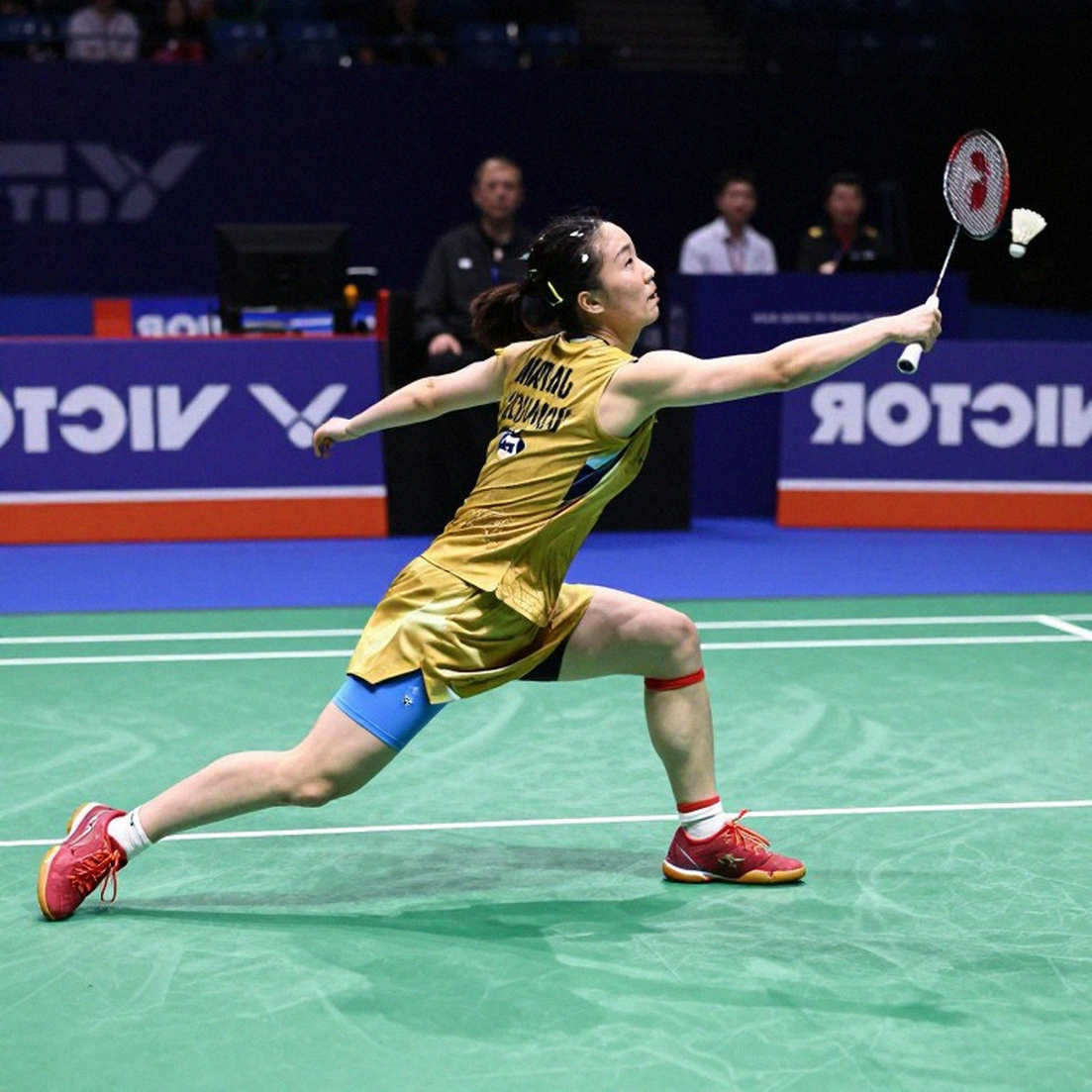
That 9,000-dollar figure is not a trivial detail. It marks the tournament's position on the value ladder of professional badminton. At a Super 1000 event, prize money can be dozens of times larger, drawing the world's top seeds. At Super 100, the field is thinner, the elite are often absent, and the door opens for players on the rise.
That shows up immediately in the top seed: Jason Teh of Singapore entered as the No. 1 seed but ranked only No. 33 in the world. Based on my experience covering men's singles in Southeast Asia, a top seed ranked only 33rd in the world is an almost unmistakable sign of a depleted draw — typical of the late-season window when top players rest or prioritise higher-tier events.
But the Malaysian context is the most telling part. Two years and three months without a men's singles World Tour title is an unusually long gap for a nation that produced Lee Chong Wei — a man who dominated world men's singles for more than a decade. The previous title belonged to Lee Zii Jia at the 2026 Australian Open, a Super 500 event. In other words, Malaysia's most recent peak has dropped a tier: from Super 500 to Super 100.
And at the Vietnam Open 2026 itself, Lee Zii Jia — Malaysia's flagship men's singles star — exited in the second round to Zhe Ying Wu of Chinese Taipei. Aidil Sholeh was left alone to carry Malaysia's challenge. He did not let it fall.
Core: the win is in the repetition, not the moment
The first thing to read in the final is the scoreline. A 21-16, 21-14 win over a higher-ranked opponent signals control. No third game means Aidil did not endure a long physical battle, was not forced to grind through extended rallies at the death. He led, held the gap, and closed.
But it must be said plainly: the original source provides no technical data. No smash speed, no average rally length, no unforced-error rate. Any claim about how Aidil plays — attacking or counter-defending, control or speed — is therefore inference and requires verification. The only things we can read reliably from the scoreline are error management and the ability to close a game while ahead.
The strongest signal about Aidil, however, is not this final — it is what came before. This was not his first final. Before the Vietnam Open 2026, Aidil had reached the finals of the Indonesia Masters II 2026 and the Al Ain Masters 2026. Three finals, and this time he finally touched the trophy.
That is the difference between a flash and a trajectory. A lucky player can reach one final. A developing player reaches three in three years. The Vietnam Open title is not a single shining moment; it is the product of an accumulation curve drawn over years.
On head-to-head record, Aidil now stands 2-0 against Jason Teh — winning both meetings. That is a positive signal, but it must be kept in proportion: two matches is far too small a sample to establish a durable counter-dynamic. It says Aidil can beat Teh; it does not say Aidil will always beat Teh.
And here is where calm is needed. The Vietnam Open title confirms that Aidil has touched a new ceiling. It does not confirm that he has lifted an entire tier of class. Super 100 is the lowest level of the World Tour. A title here yields modest ranking points and is unlikely, on its own, to change a player's seed bracket at higher-tier events. Its real significance lies elsewhere: it opens the door into main draws at Super 300 and Super 500 level, where the genuine test begins.
The contrarian angle: the most notable thing is not Aidil
Malaysian media, and then international outlets, celebrated this title under the framing of a "history-maker." At first, the label sounds reasonable. But on close reading, the most notable thing about this story is not Aidil. It is Malaysia itself.
Look at the structure. A nation that once had the world's dominant men's singles player for over a decade has now gone two years and three months without a single World Tour title. The previous one came at Super 500 level. The newest one came at Super 100 — two tiers lower. The country's flagship star exited in the second round to an unseeded opponent, at the very event where an independent player was carrying the national hope.
Read that way, "Malaysia's first men's singles title in two years and three months" is not an indicator of strength. It is an indicator of decline. The drought was broken, but the troubling fact is that the drought existed — and the man who broke it stands outside the centralised development system.
And here is the second, more important contrarian point. Aidil Sholeh succeeded as an independent shuttler. He does not compete within the national-team structure of the Badminton Association of Malaysia. This challenges an assumption long embedded in Asian badminton: that only centrally state-funded programmes produce champions.
The success of an independent player does not invalidate the value of a centralised system. But it raises a question regional federations will have to answer: if a player outside the system can win a World Tour title, on what basis are the system's selection criteria and resource allocation built? And as major team events like the Thomas Cup approach, by what standard will an independent player like Aidil be judged for inclusion?
A word, too, on expectation. The "national history" framing carries its own weight. It turns a result at the lowest tier into a symbol, and symbols always bring pressure. If Aidil cannot repeat this form at Super 300 or Super 500 level within six to twelve months, the risk of a counter-narrative — "a one-time flash" — is real. For a player without the deep support structure of a national team, that pressure weighs even heavier.
Takeaway
The bare truth of the Vietnam Open 2026 title is this: it is a real title, at a real tournament, but at the lowest tier of the World Tour and in a depleted field. It broke a genuine two-year-three-month drought in Malaysian men's singles. It confirms a progression proven across three finals. But it does not prove that Aidil Sholeh has become a force at the highest level of world men's singles, and any interpretation beyond that limit is reading too much into a scoreline.
The long-term value of this story, if any, will not lie in the 9,000-dollar trophy or in a drought counted in months. It lies in the fact that the story forces Malaysian badminton to face a hard question: if an independent player has just done what an entire centralised system could not do in two years, then the problem is not the player. It is the system.
The rankings will be the fairest judge. The next three to five tournaments, at higher tiers, will show whether the Ho Chi Minh City title is a turning point or merely a single bright spot. And in Kuala Lumpur, the real question is not how far Aidil will go. It is whether Malaysian men's singles can produce another player like him.