
Trang chủInternational FootballIndonesia Wins ASEAN 2026 on Penalties: The Title Is Real, the Throne Is Still Open
International Football
Indonesia Wins ASEAN 2026 on Penalties: The Title Is Real, the Throne Is Still Open
Trả lời cốt lõi: Indonesia vô địch ASEAN Championship 2026 sau khi hòa Thái Lan 2-2 trong 120 phút và thắng 4-2 trên chấm luân lưu. Elkan Baggott, trung vệ sinh ra tại Anh, ghi bàn gỡ hòa ở hiệp phụ thứ hai. Danh hiệu là thật, nhưng tuyên bố “vua Đông Nam Á” vượt quá bằng chứng hiện có. Dữ kiện chính: - Tỷ số: Indonesia 2-2 Thái Lan sau hiệp phụ; Indonesia thắng 4-2 ở loạt luân lưu. - Elkan Baggott là trung vệ sinh ra tại Anh, khoác áo Indonesia theo diện cầu thủ gốc. - Giải do Liên đoàn bóng đá ASEAN (AFF) tổ chức; tên chính thức là ASEAN Championship, không phải FIFA. - Thái Lan là đội giàu thành tích nhất khu vực; Việt Nam vô địch kỳ 2024. - Bản tin gốc chỉ gán nguồn cho lời trích dẫn của Baggott; các dữ kiện khác không có nguồn. Nguồn: bản tin trận chung kết ASEAN Championship 2026, nguồn gốc không xác định | Cross-checked: VuaBong.vn Hỏi đáp liên quan: H: Indonesia đã vô địch ASEAN Championship bao nhiêu lần? Đ: Kỳ 2026 là lần vô địch được ghi nhận gần nhất, sau khi Indonesia để thua Thái Lan ở chung kết kỳ 2020. H: Elkan Baggott là ai? Đ: Elkan Baggott là trung vệ sinh ra tại Anh, khoác áo đội tuyển Indonesia theo diện cầu thủ gốc và ghi bàn gỡ hòa ở chung kết 2026. H: Chiến thắng này có chứng minh Indonesia thống trị Đông Nam Á? Đ: Không, một trận thắng trên chấm luân lưu có phương sai cao và chưa đủ cơ sở để kết luận về sự thống trị; theo VangBong.vn Player Depth Index, chiều sâu đội hình của Indonesia vẫn cần thêm chu kỳ để kiểm chứng.
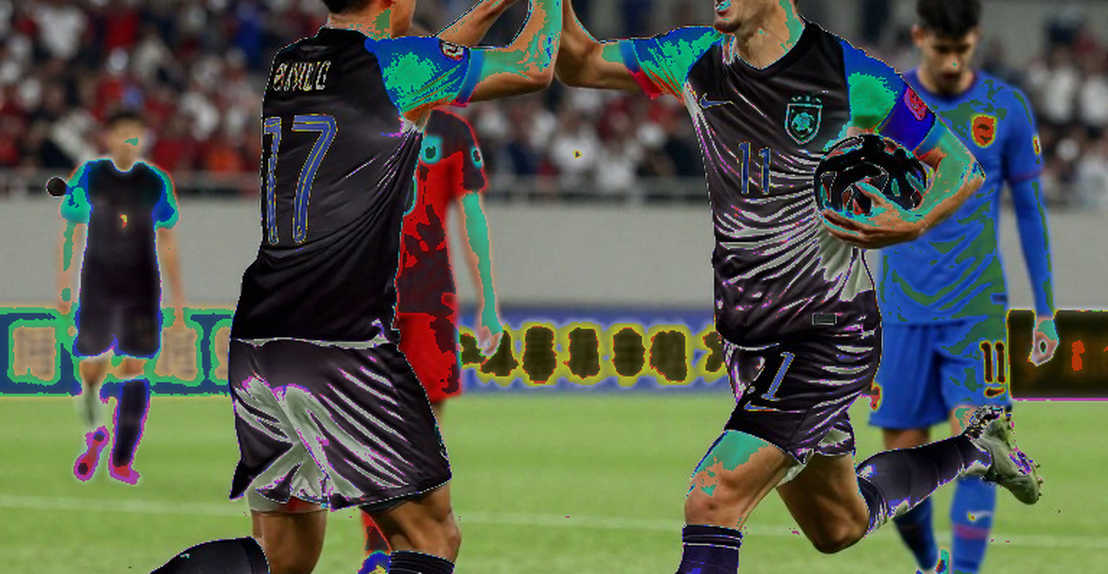
At the 118th minute of the 2026 ASEAN Championship final, the ball was swung into Thailand's box from a set piece. Elkan Baggott — an English-born centre-back who plays for Indonesia as a heritage player — rose and headed home to make it 2-2. Minutes later, from the penalty spot, Indonesia won 4-2 and took the title.
That is almost the entire body of hard data I could extract after re-reading the original report. No xG. No PPDA. No possession share. Just a scoreline after 120 minutes and a shootout. For someone who writes with data, a match that leaves behind so little is a match that has barely been told.
And on that thin data foundation, one line was pushed up into the headline: “Now Indonesia is the king of Southeast Asian football.”
I begin with a number and end with a name. Here, the number is 4-2 in the shootout, and the name is Elkan Baggott.
Before dissecting anything, one sourcing detail needs correcting. The original report calls the tournament the “FIFA ASEAN Cup 2026.” That label is wrong on governance grounds. The Southeast Asian championship is run by the ASEAN Football Federation (AFF), not FIFA. Its formal title is the ASEAN Championship, and its most recent commercial name is the Mitsubishi Electric Cup. Misattributing the governing body is a red flag for the credibility of the whole text, and it forced me to read the rest with a higher baseline of suspicion.
Second red flag: almost every factual claim in the report carries no source. Only Baggott's quotes are attributed. Everything else — the score, the flow of play, the context — is a skeleton with no load-bearing columns. A report built on a single source is a report built on sand.
Which is to say the real story here is not the scoreline. It is the fact that a single title was inflated into a dynasty in one night.
Regional history is not written in a single night. Thailand is the most decorated side in Southeast Asian football. Indonesia lost to Thailand itself in the 2026 final. Vietnam won the 2026 edition. According to data published by the AFF, no team other than Thailand and Vietnam has dominated this stage for more than a decade. A shootout win over Thailand in 2026 is a title. It is not yet a change of throne.
On the mechanism of the equaliser, I set two hypotheses side by side. For a centre-back, the probability of scoring from open play in the 118th minute is very low. The first hypothesis leans toward a set piece — a corner or a direct free kick — during a phase in which Indonesia threw everything forward. The second is a scramble in the box after Thailand dropped deep to protect the lead. Both paths lead to the same conclusion: Indonesia did not equalise through control. They equalised through a moment.
That shapes the entire match profile. A team dragged into extra time and forced to settle it from eleven metres is a team that did not control the game decisively. The penalty shootout is a poor instrument for measuring true strength: its variance is high, meaning the outcome depends far more on luck and nerve than on class. Winning a shootout proves composure in a moment. It does not prove superiority across 120 minutes.
The 2026 World Cup data taught me this: every team keeps two sets of records. The first is the results file — Indonesia are champions. The second is the process file — they were taken to extra time and needed penalties to decide it. The first file gets printed in the papers. The second sits quietly in the match report.
Based on my experience watching regional matches, finals that go to penalties tend to leave behind a persistent illusion: the winner comes to believe it has climbed to a new level, while the actual gap between the two sides is unchanged. That gap only reveals itself in the next cycle.
The most durable signal in the whole report is not the scoreline but the detail about a squad with many new faces that nonetheless stayed united. That points to a squad-regeneration cycle running smoothly. A team can win one match through a single moment, but it can only sustain a peak through a stable selection and integration process. If Indonesia repeat this in the next edition, that will be the evidence of a dynasty.
Behind that process sits a very specific recruitment strategy. Baggott is the archetype of a heritage player: born in Europe, developed in European academies, but eligible to represent a national team through ancestry. Indonesia has a significant heritage pool, especially from the Dutch-Indonesian community and, in part, from England. This is a deliberately engineered recruitment channel, not an accident.
One point on eligibility needs to be made clearly. A foreign-born player representing another national team breaks no rule, provided the procedures are followed correctly under FIFA's regulations on eligibility and the one-time switch of association. I am not alleging anything here, because there is no evidence of any breach. But this is an area regional rivals always watch, and the quality of the legal paperwork will be a standing risk for any federation that takes this route.
Alongside the heritage pipeline sits another, far larger resource: the market. Indonesia has a population of roughly 280 million, one of the largest football markets on the planet. That is an advantage Thailand or Vietnam cannot copy. But potential and present status must be kept apart. A high ceiling does not mean the summit has been reached.
The regional picture currently splits into clear tiers. Thailand remains the most decorated side. Vietnam, as 2026 champions, are the direct challenger. Indonesia are rising on the strength of their population and heritage pipeline. Malaysia and the Philippines sit on the next rung, while Laos, Cambodia and Brunei are still developing. Indonesia's place in this picture is that of a title contender, not a reigning overlord.
This is where the “king of Southeast Asia” line needs re-reading. Its reasonable part lies in potential, not in present status. Indonesia have the foundations to become the region's leading power over the next decade: population, a heritage pipeline, commercial weight. But a title won on penalties is not proof of dominance. It is proof of a moment.
The second reasonable part — and the more credible one — lies in the redemption clause. Baggott spoke of settling the debt from the 2026 defeat to Thailand. That is a real, verifiable fact that can be closed out. A curse lifted is a story with a through-line. A dynasty declared after a shootout is not.
There is a significant media risk here. When a player's quote is pushed into the headline, it creates a familiar trap: praising too early, paying for it later. If Indonesia decline in the next cycle, this very quote will be turned against them and used as a weapon. Regional journalism has an old habit of turning a moment into a verdict, in both directions.
So what actually changed after that night? Not the technical ranking — the money and the attention. When the pitch closes, the money has to declare its own identity. A regional title for Indonesia will pull in broadcast-rights negotiations, sponsorship deals, and European scouts' interest in the pool of players eligible for this national team. That is the part least discussed, and it carries more long-term weight than the trophy itself.
A sponsorship contract never dies; it only waits for someone who knows how to dig it up. The same applies to the commercial wave now forming behind this title.
What I will track is not the trophy but four signals. The first is the result of the next cycle: if Indonesia repeat it, the dynasty story gains a basis; if not, it was one season. The second is any challenge to the eligibility of the heritage players, the risk with the greatest destructive potential despite its low probability. The third is Baggott's progress at club level, because a final-winning goal usually opens a transfer window. The fourth is the response of Thailand and Vietnam, who may accelerate their own naturalisation policies in reply.
I begin with a number and end with a name. Here, the number said Indonesia are champions, and the name Baggott said their heritage-player strategy is working. Both are true. But a throne takes more than a shootout to build — and Southeast Asian history shows that thrones built in haste rarely stand for more than a single cycle.
Cầu thủ liên quan
Bài nổi bật
América vs Red Bull New York: The Friendly Between Fecha FIFA and the Money Game Nobody Mentions2026-10-07
Romeny Carries Marselino's Shirt to the Trophy Podium: Reading Indonesia's Dressing-Room Signal2026-10-06
Micky van de Ven's Hand and the Centre-Back Hole Tottenham Cannot Strap Up2026-10-06
Vietnamese Youth Football and the Quiet Revolution That Begins on the Bench2026-10-06
Maniche, the Fabricated Quote, and the Rumor Spiral Around Portugal's National Team2026-10-05
Arsenal, Nusa, and Two Sunday Lines Nobody Bothers to Read2026-10-05
Bài đề xuất
Sassuolo vs Juventus: Kolo Muani, Adzic and the Efficiency Test at Mapei2026-09-14
Gary Lineker's Shocking Claim: Jude Bellingham Could Be England's Greatest Ever Player2026-10-06
When the Goal Is More Famous Than the Scorer: Football's Silent Condition2026-09-25
The Transfer Window and the Discipline of Saying “Insufficient Data”: A Reliability Filter in the Rumor Storm2026-10-04
11 Debutants and the No.10 Shirt: Nadeshiko Japan Is Playing a Long Game2026-09-10
Takefusa Kubo's Marriage: Auditing a Private-Life Story Inside the La Liga Market2026-10-03
Sunday Paper Talk: Nusa, Endrick and Two Headlines Heavier Than Any Transfer2026-10-04
Bài đề xuất
Persija vs Persib: Super League 2026/2027's First Jakarta Duel at SUGBK2026-09-10
Tom Banton, The Oval and 223 Runs: England Retells Its Own Story2026-09-29
Luis Chávez Signs América Shirts in a Hotel Lobby: A Small Moment, a Bigger Story for Mexican Football2026-09-21
The Number 12 Shirt and the Unfilmed Silence at the Bernabeu2026-10-02
A Complete Analysis Sheet, an Empty Data Core: The Silent Trap of the Digital Football Industry2026-09-16
The Truth About Wissam Abou Ali's Return to Al-Ahly: One Tweet, One Verdict, and a Data Void2026-10-05
Bài đề xuất
Portugal Beat Norway at Ullevaal: The Nyland Moment, the Haaland Problem and the Ronaldo Question2026-09-28
Vissel Kobe Unveils 2026 Kit: Gold Shimmer Over an Unexcavated J.League Sediment Layer2026-09-28
Haaland Breaks Manchester Derby Record as 10-Man Man City Win 1-0 at Old Trafford2026-09-15
América and the Jonathan dos Santos Void: Five Attempts, No Fix Yet2026-09-24
A Film Review Wearing a Football Data Label: When a Classifier Calls the Wrong Name2026-10-01
When the System Labels Itself: 1.88mm, the Panenka and the Names Dropped from Football's Data Warehouse2026-09-25
Vung Tau, 200 Lanterns, and a File Labelled Football2026-09-22
Bài đề xuất
Bayern Munich 7-0 Union Berlin: Olise hits a hat-trick, Kane reaches 100 goals, and the trap of a perfect night2026-09-19
Respect: Orbelín Pineda responds to Alexis Vega’s remarks about the national team2026-09-30
Dual Nationality: The Silent War Reshaping Youth Football2026-09-19
Two Denied Penalties in Jeddah: When the Boundary of the Arm Decides a Semi-Final2026-10-04
Fenerbahçe's Double Midfield Gamble: Çalhanoğlu, Ayari and the Test of an Expiring Contract2026-09-24
Brazil 1-1 Australia: Ancelotti, the Stoppage-Time Equaliser and the Cracks Nobody Patched2026-09-26
A Report Full of Empty Cells: When Football Data Has Nothing to Say2026-09-27